
Editing for the food sector: how I build specialist knowledge at industry events

Bringing industry insights to your editing and translation projects
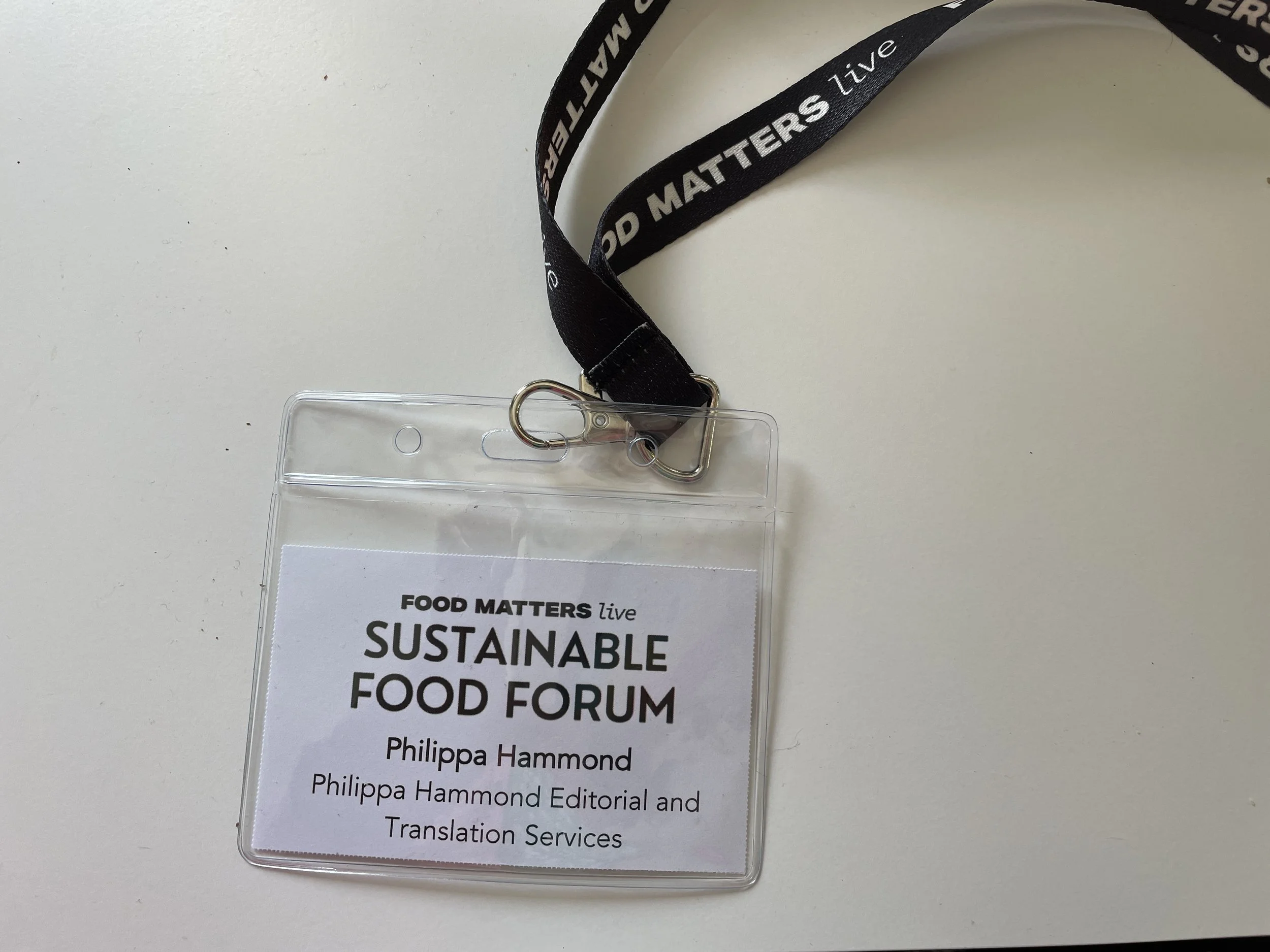
When I tell people I'm attending events like the Sustainable Food Forum and the Speciality & Fine Food Fair, they sometimes ask: ‘Why does a copy-editor need to attend industry events?’
The answer is simple: I need to understand my clients’ worlds.
I can't edit their policy reports, white papers and research publications effectively if I don't understand the challenges they are grappling with.
Within my international development and governance niche, my favourite sub-field is food security and food systems, so attending events in this sector is a real treat.
When I work on documents about sustainable food systems, agricultural policy or food innovation, I need to know more than grammar rules. I need to understand the terrain clients are operating in – the lobbying pressures, consumer resistance to change, and the geopolitical dimensions of food security. That context shapes every editorial decision I make.
What I learned at the Sustainable Food Forum – and how it informs my editorial work
Chaired by journalist Samira Ahmed, the Sustainable Food Forum delivered expert-led discussions on key policies and challenges in our global food system.
Here's what I took away – and how these insights shape the work I do for clients.
Understanding the global context
The global food system is the single most destructive environmental force. Agricultural production generates more emissions than all forms of transport combined. A staggering 77% of agricultural land is used for animal production. Yet neither the meat nor the dairy industry would exist in the UK without subsidies.
Why this matters for your documents: When edit or translate policy reports or white papers on food systems, I'm alert to whether the text acknowledges this uncomfortable reality. Understanding the global dimensions of the crisis helps me ensure arguments are clear and robust, and recommendations land with readers.
Recognising the pressure from powerful lobbies
There are powerful food lobbies pulling the strings, and many panellists argued that it's time to call out these big players. The Netherlands has introduced a policy to reduce livestock numbers by 30%, the first of its kind in the world.
If we fixed our food system, it would pave the way for huge progress in mitigating climate chaos. Earlier this year, I attended another food systems conference that highlighted some other heartening global food policy initiatives. Things ARE being done but we need to do more at every level, particularly at policy level.
Sustainability is not a trend
We often talk about sustainability as if it’s a trend. But in fact it’s a must. Food industry coalitions and collaborations are the answer if we are serious about climate action. And the Sustainable Food Forum was a good place to start.
We heard first-hand from producers about how innovations in ingredients and processing may hold the key to a more sustainable food system.
The consumer acceptance challenge
We face a doubling in meat production in future, as the world's population grows. And yet most consumers still make their buying decisions based on taste and price – this means that customer acceptance has to be a priority.
Why this matters for your documents: If you're writing about alternative proteins or food innovation, I know the tension you're navigating. Your research might show that plant-based alternatives are essential, but recommendations need to acknowledge consumer behaviour. When I edit a document, I ensure the tone reflects this nuance, making recommendations more credible and actionable.
Learning from the Speciality & Fine Food Fair
At the Speciality & Fine Food Fair, I spoke with artisanal producers who are bringing ethical, sustainable products to market. Their challenges? Scaling up without compromising on values, competing on price with industrially produced alternatives, and communicating their story to retailers and consumers.
Why this matters for your documents: I understand the real-world constraints sustainable food businesses face. This helps me edit for clarity around implementation challenges.
Bringing specialist knowledge to every project
Events like the Sustainable Food Forum and the Speciality & Fine Food Fair inform my knowledge about:
Current policy debates in sustainable agriculture and nutrition across different countries.
Industry sensitivities around meat consumption, subsidies and regulation.
Consumer behaviour research and its implications for food system change.
Innovation trends in alternative proteins, regenerative agriculture and food technology.
Investment priorities in the sustainable food sector.
This knowledge base means when you send me a policy report on agricultural emissions, a white paper on food innovation, or a research publication on consumer acceptance of novel foods, I'm not starting from scratch. I already understand the pressures, so I can help you strike the right tone.
How can I help?
If you are a food system thinker, innovator or producer, I can help you hit the right note in your English publications.
If you are working hard to attract investment and new business to your region, your communication materials become mission-critical. You can’t afford to miss a beat. I can help you communicate complex food policy without losing your authority or your audience.
As an editor, content writer and translator specialising in sustainable food and food policy, I’m already regularly helping my customers get their message across.
If you’re interested in exploring how I can help you, click the button below to start a no-pressure conversation.