
What’s included in my copy-editing services?
As well as translation, I also offer copy-editing as a service. This service helps customers sharpen their sentences and make sure their message is consistent and compelling.
It’s a service for English-speaking customers and for multilingual authors writing in English.
Investing in editing services can feel expensive and risky when you’re not completely sure what that editing service will involve. You may ask:
Will the editor go too far?
How long will they take to complete the edit?
This blog post will help you understand everything you need to know before you get in touch.
This article will cover:
What a copy-editor does
What a copy-editor doesn’t do
Why you may need to work with a copy-editor.
Hopefully, the information in this article will help decide whether my editing services are right for you.

Everyone wears a different hat in an editorial project team
What exactly is copy-editing and what’s included in my services?
It’s possible you may not have even heard of copy-editing. Plenty of my friends ask me what exactly it is, even though they know I’ve been offering this freelance service for years now, and even though most people are aware of the importance of copy-editing and proofreading in a publishing workflow.
You may have heard of proofreaders, but you may be surprised to learn that, although copy-editors and proofreaders are both involved further along the publication chain, the scope of their work is different. I’ll explain this further below.
“In text terms, a copy-editor is your structural engineer.”
Let’s imagine you’ve built a house/car/other important asset that requires multiple professionals to get the final product through to sign-off. You can probably see where I’m going with this!
The architect will have designed the house, and a construction company will have built the house. But will you receive that house in its raw state, directly from the builder? I hope not!
Before you collect the keys, you’ll want someone to check the construction is structurally sound. Someone who can ensure the house will perform as expected and carries no risk. For a construction, this would be a structural engineer. In text terms, that person is a copy-editor.

Language guardian angels are out there if you know where to look
What a copy-editor does
David Crystal describes editors as ‘language guardian angels’. This analogy is my personal favourite.
Inside Book Publishing says that the ‘role of the copy-editor, who may be the only person other than the author who reads the book before publication, is to ensure that the text and illustrations are clear, correct, and consistent for both the printer and the ultimate readers’.
You may expect a copy-editor to check the nuts and bolts of writing at sentence level, but did you know that they also take a broader look at your document?
“Copy-editors have experience of a wide range of writing genres.”
Copy-editors usually work as part of a wider project team that may include commissioning editors, marketing teams, proofreaders and typesetters. Like other editorial professionals, copy-editors will need to be well read and have experience of a wide range of writing genres.
The specific tasks of a copy-editor include:
Labelling or styling (with codes/tags, or with Word styles) all features of the text. These days, this usually takes place on screen.
Correcting literal errors (typos).
Monitoring factual content and spotting internal contradictions or inconsistencies.
Reading the text for sense and clarity e.g. logical argument, tidying up expression and word use, checking for inappropriate use of terms.
Checking the structure of the writing is sound.
Checking for omissions, inconsistencies and potential legal issues
Ensuring consistency and clarity at sentence and whole-text level, for example by removing redundant words and phrases.
Formatting any tables and figure captions.
Checking consistency against house style,
Checking and troubleshooting the consistency of the content itself (e.g. factual inaccuracies).
Awareness of redundancy, ambiguity.
Delete irrelevancies, unnecessary repetitions and infelicities.
Checking references – a fiddly process that requires specific knowledge and expertise.
Fact-checking (if agreed with the author/client).
A copy-editor will also usually produce a style sheet for their customer so they can see what top-level changes have been made/suggested and why.

Copy-editors help readers see things clearly
What standards can you expect from my copy-editing service?
As a professional member of the Chartered Institute of Editing and Proofreading (CIEP), you have the reassurance that I have completed extensive training in professional editing and proofreading, have an in-depth understanding of English grammar and punctuation, and have also demonstrated excellent attention to detail and substantial experience.
Having said all that, my copy-editing service is tailored to what you need. I’m not prescriptive – I understand that language is constantly changing, and I understand the writing process, knowing that writers are free to play around with language to get a message across in a particular tone of voice.
The focus is on making your writing easier for readers to digest – readers shouldn’t have to spend time reading and re-reading sentences until they make sense. Checking for and removing redundancies can also enhance the style, clarity and readability of your writing.
“Readers shouldn’t have to spend time reading and re-reading sentences until they make sense.”
Copy-editing gets your text ready for publication by ensuring that it’s clear, consistent, correct and complete, and that it reads well for its intended purpose. The types of documents I’ve worked on include project evaluation reports, education policy briefs, annual reports, newsletters and non-fiction books. I can also edit for plain English and edit digital content for education publishers.
Ensuring the manuscript is tidy and the editing thorough
Some of the individual tasks of a copy-editor involve ‘tidying up’ a text, and this sort of task may not be visible to an author/customer. For example, ‘silent’ changes like converting two spaces to one, or making sure heading styles are consistent throughout, are helpful tidying tasks that a customer will appreciate but probably doesn’t want to have to worry about themselves.
Although I’m not prescriptive about it, I am a grammar and punctuation nerd. So my service can include advice on grammar and punctuation issues if needed, and/or producing a style guide for your organisation.

Copy-editing can get confused with other writing services
What a professional copy-editor doesn’t do
Copy-editing isn’t just about spotting literals and showering your text with red ink. Copy-editing is not about deleting lots of paragraphs or criticising an author. You shouldn’t expect to receive a surgically altered text from your copy-editor.
Copy editing is also not:
Rewriting
Proofreading
Revising translations
Copywriting or content writing
Journalism
Although a copy-editor may also offer these, all of them are separate services that demand related but different editorial skills.
For example, proofreading tends to come later in the publishing workflow, after the copy-editor has worked their magic and once the text is in layout. It’s the final quality check, the final polish.
“Good copy-editors should not get bogged down in providing some sort of grammar police service.”
A side note about revision: revising translations is not the same service as copy-editing. Although the reviser will need to include checking for grammatical errors in their workflow, they must also check the translation against the original source language text. This means reviser is looking at two texts at the same time to check the translation is accurate and that it conveys the same tone of voice as the original.
When I revise translations, I do also check for errors in grammar and punctuation. This makes it similar to editing, but it’s definitely not copy-editing as editing professionals know it. That’s why I call this a ‘revision’ service, rather than an editing service.
What if an editor goes too far?
Authors are naturally close to their text. It’s their baby and nobody else’s. Once they’ve finished the hard work of their first or second draft, they need a second pair of eyes. What they don’t need is an editor who takes liberties with their carefully crafted writing and distorts their voice or message.
“Copy-editors are there to enhance the writer’s work.”
Copy-editors should not get bogged down in providing some sort of grammar police service. Instead, they are there as the writer’s ally. They are there to enhance the writer’s work, not to impose their own style on an author’s work. If you’re working with an experienced and sensitive editor, the editor-author/client relationship is a partnership.
Going back to our house-building analogy, you don’t want someone to come along with a verbal bulldozer and drive it right through your text.
An experienced editor will have the training and experience behind them to know a zombie language rule when they see one, and to judge how far to go with any suggested changes to the text.
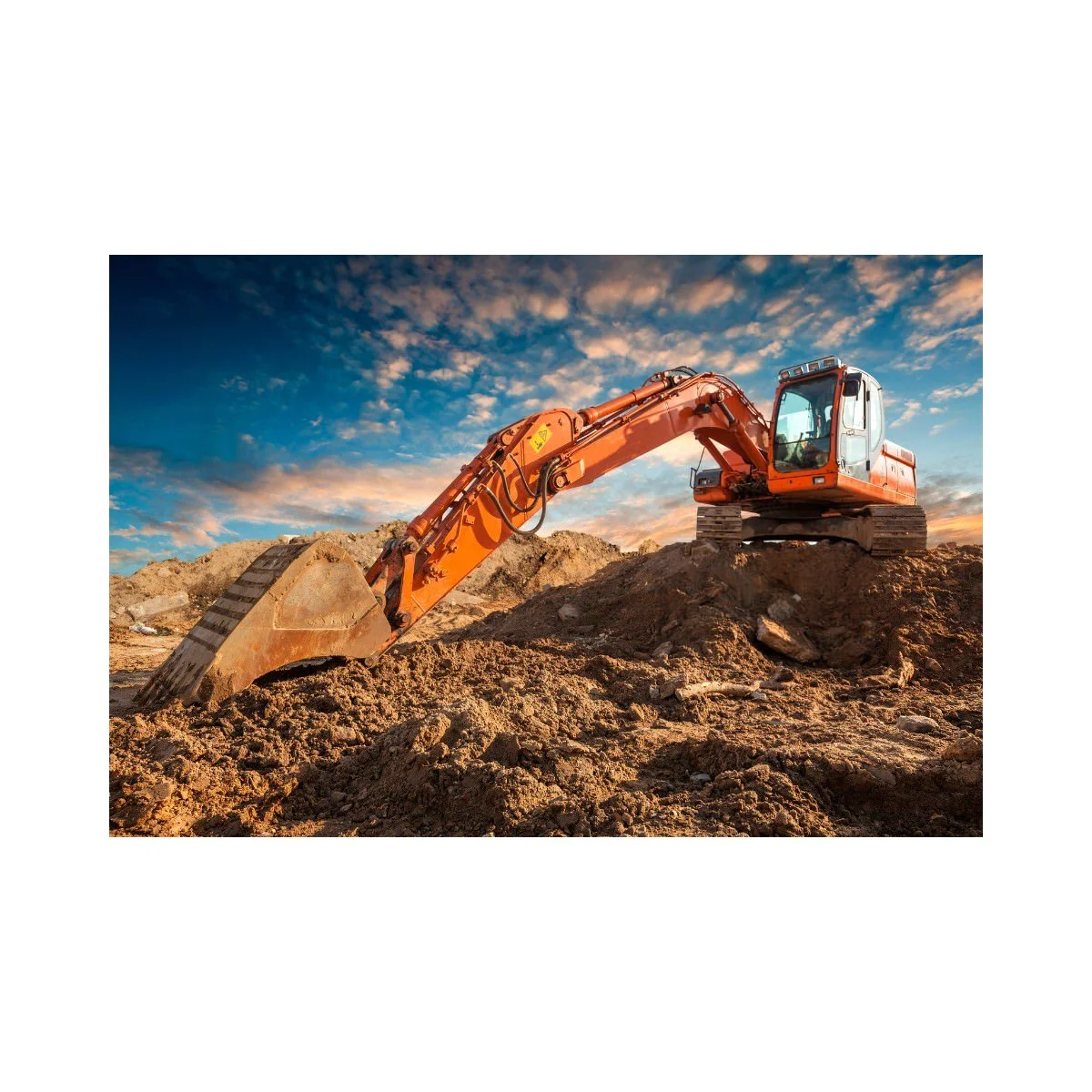
You don’t want someone to come along with a verbal bulldozer and drive it right through your text.
Why your policy report may need an editor

Grammar and readability apps can be a blunt instrument
You may be thinking, ‘OK but couldn’t I just use a spelling, grammar, punctuation and readability checking app to save time and money?’
Or you may feel equipped to check your own writing, or get a colleague with great spelling skills to do it in-house.

Judgement calls flow from decision-making processes
Why grammar and proofreading apps just aren’t enough
Grammar and readability checkers can be useful for checking routine errors that might otherwise get missed. When your in-house staff are overstretched, it can be tempting to over-rely on them.
I sometimes use this type of tool like an office assistant that takes care of some of the more repetitive errors for me. I use tools like PerfectIt and Antidote to do some of the heavy lifting with more tedious and repetitive tasks in the editing process (e.g. checking spelling consistency), saving me and the client time.
“You may expect a copy-editor to check the nuts and bolts of punctuation and grammar at sentence level, but did you know that they also take a broader look at your document? ”
However, these types of apps are a pretty blunt instrument. They can’t make an editorial judgement call. When I use them myself, it’s only in the initial or final tidying-up/consistency check stages, and I do need to review each suggestion individually. I remain the decision-maker, and that ensures compliance.
To achieve the desired results – clear writing that conveys the author’s message loud and clear – a good editor must focus on the detail AND the big picture to sharpen a piece of writing. That’s something an app just can’t do.
A copy-editor also needs a systematic mind to keep tabs on myriad points, together with mastery of the subtleties of language and meaning (and, usually, specialist subject knowledge). Another thing that no app or online tool can offer alone.

Slay those zombie language rules
If you ask someone without copy-editing training or experience to check your text, they may not have the ability to judge how far to go. They may relish the challenge of getting out the proverbial red pen and spattering it all over your writing, but you may find this ends up creating more back-and-forth than you have the time or budget for.
Plus their knowledge of grammar, punctuation and good writing style may date back to their primary school days, so watch out for those zombie language rules!
Consistent house style
A piece of text is rarely a one-off. Even if your reports and publications are not released regularly, they will almost certainly follow a house style and you’ll want your style and brand voice to be consistent across all your publications.
A readership may also vary both geographically and in terms of language and understanding. So editing and proofreading services can also help you to edit to the appropriate language level if necessary.

A winning team
So that’s it: everything you need to know about my copy-editing services. Hopefully, this post has helped you make some decisions, but if you have further questions about my services drop me an email at hello@philippahammond.net and I’d be happy to answer them.
In this post I’ve outlined:
· What copy-editing services involve
· Concerns about the scope of copy-editing
· What copy-editing is not
· Why you might need copy-editing services
If this post has made you realise that you need the text equivalent of a structural engineer to give your publication the all-clear, click the image below and we can arrange an initial chat to discuss what you need and the outcomes you want to see.
I hope this post has helped you. As a reminder, you can book a free call to discuss how I can help you.
Or you could sign up to my newsletter for updates on language, grammar and writing.

References
David Crystal (2021). Imagine an Editor. CIEP focus paper: https://www.ciep.uk/resources/fact-sheets-home/fact-sheets-free#IAE
Cathy Tingle. First principles: Using 5Cs with any format. https://blog.ciep.uk/using-5cs/. CIEP blog.
What is Proofreading? CIEP. https://www.ciep.uk/about/faqs/what-is-proofreading/
What is Copyediting? CIEP. https://www.ciep.uk/about/faqs/what-is-copyediting
Inside Book Publishing. Routledge, 2020.