Tips for building and refining your editing skills if you’re a translator or newbie editor
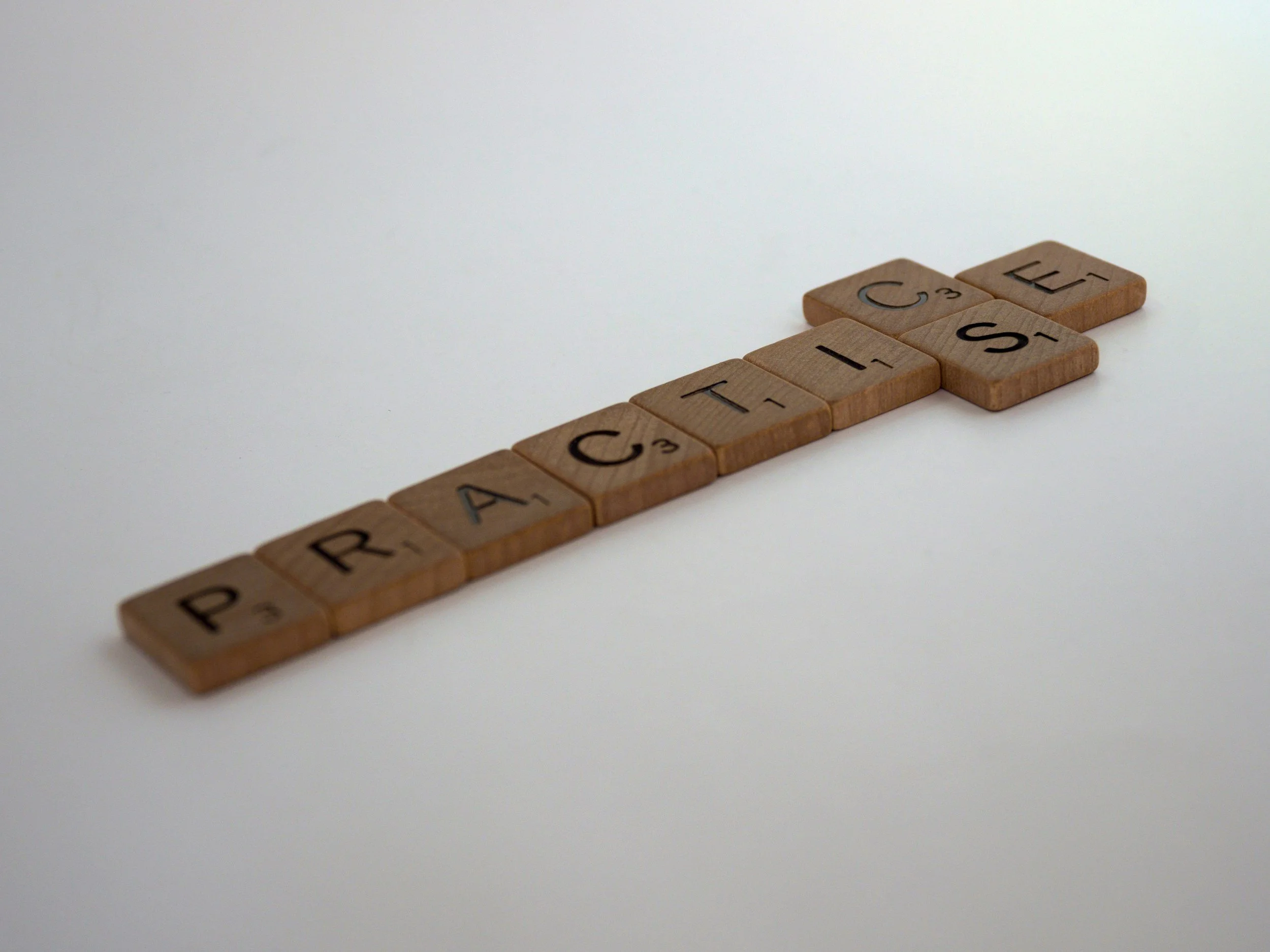
Image courtesy of @brett_jordan
Becoming an editor, and becoming a better editor
I came to copy-editing from translation, but the move felt natural. When I was studying for my MA in Translation and Linguistics, I took a short evening class in proofreading that taught me the BSI proofreading marks and the basics of proofreading, while also refreshing my grammar and punctuation knowledge.
That evening class was all the training I did for a while, but I continued to read up on editing and proofreading, and attended informal courses on editing and about the craft of writing. As an in-house and then freelance translator, I was increasingly being asked to ‘revise’ other people’s translations, and even to work on editing assignments.
I had great feedback from clients, but I knew I needed more of a solid foundation that would help me justify my editing decisions and revisions, and help me get better as an editor. I also realised that I loved doing editing work as a standalone service, separate from translation.
Whether you’re a translator who is considering diversifying into editing work, or an established editor refining your skills, it’s essential to keep your skills sharp.
In this post I will cover:
1. How to build or refine a foundation in editing skills
2. What structured learning about editing is available
3. Online resources for practical editing exercises for becoming a better editor.
1. Build Your Foundation (or Refresh It)
As with many knowledge professions, reading widely around your subject is always recommended. Fortunately, anyone keen to refine their editing skills can find style manuals, copyediting handbooks, and guides to help them. This makes building a foundation of knowledge or refreshing your editing skills relatively accessible and affordable.
If you’ve been asked to edit as part of your existing work and you’d like to read about some strategies used by editors at a professional level, these guides are a great start:
When I did my first copy-editing course, I was advised to read Butcher’s Copy-editing from start to finish. Honestly. So I did. It can be hard to read a reference book like you would a novel, but editing techniques and rules are so well explained in this book that reading chapter by chapter makes complete sense.
Another key reference book is New Hart’s Rules (The Oxford Style Guide). For most UK-based editors, this is ‘the one’. There’s no need to read this guide from cover to cover before starting (unless you want to), but it’s one to keep handy and refer back to almost daily. I use it in combination with the New Oxford Dictionary for Writers and Editors and the Oxford A-Z of Grammar and Punctuation.
Having these book to hand, and reading through them, will be endless helpful, especially if you’re transitioning from another profession. I’d even argue that, if you don’t have them, working as a copy-editor would be almost impossible.
Because I came from another profession without first working in-house in publishing, I also read The Copyeditor’s Handbook: A Guide for Book Publishing and Corporate Communications to familiarise myself with editorial conventions and terms. Although the authors are based in the US, they offer guidance for the UK market, too. I read this one from cover to cover, too, to learn more editing techniques and strategies for a wide range of publications, boosting my confidence in the process.
2. Structured Learning About Editing: When and Why
There are some casual, introductory courses available on course platforms like LinkedIn learning and Udemy that will give you a very quick overview of what copy-editing involves. It’s fine to dip your toe in this way, especially if you’re in the very early stages, but it’s also important to remember that these are not recognised as professional routes into the profession.
The most authoritative and widely recognised courses on editing and proofreading are available from the Chartered Institute of Editing and Proofreading (CIEP) and the Publishing Training Centre (PTC).
For editing, the CIEP courses offer a clear progression pathway with core training that takes you from your first steps in editing all the way through to advanced editing skills. This formal training really matters, as it takes you from novice editor to proficient editor with support from a tutor who gives you regular feedback on your homework exercises. As you progress through these core courses, they count towards your progression through the CIEP’s membership grades, to become a Professional Member or Advanced Professional Member.
Alongside, the core training courses, the CIEP offers shorter courses on editorial skills such as author queries, editing and proofreading websites, editing digital content, and references.
The PTC, meanwhile, offers a wide range of self-study courses that are highly regarded in the publishing industry. You can choose e-modules, which are a cheaper way of learning some very basic skills and information about editing, and longer and more intensive courses delivered via webinars by highly experienced tutors, with homework exercises.
After initial training courses, I also decided to take a CIEP course in grammar and punctuation, because I felt I needed a refresher in this area before I could continue. I found that, even though I regarded myself as highly proficient in English grammar and punctuation, and had even taught English as a second language, I found I still had much to learn (and relearn) in an editing context.
Not everything I learned from school, through my teaching certificate, and via osmosis as a translator for many years was quite as ‘correct’ as I had thought. This nuts and bolts learning about grammar and punctuation was not only a boost to my day-to-day work, but also helped me pass the CIEP editorial test and subsequently upgrade to become a professional member (PM).
3. Editing Exercises
Even after completing formal training, there's always scope for developing or refining your editing skills. The good news? You don't always need another course - you can practise in your own time using freely available resources.
For translators new to editing
If you're a translator, start by editing your own translations (without the source text). This is a low-stakes way to develop your editor's eye without the pressure of a client deadline. You already understand the source text intimately, so you can focus purely on the editing process: identifying inconsistencies, smoothing awkward phrasing, checking punctuation.
Once you're comfortable with that, try editing translations in the public domain. With your new editor's eye, you may spot extra words, tense slips, literal phrases, or repeated words that you may have missed if you had translated the document yourself.
Structured practice exercises
The CIEP offers a bank of editing exercises on their website for direct purchase. I used these regularly before the CIEP editorial test, and they made an enormous difference. These exercises give you immediate feedback and help you identify your weak spots - whether that's spotting typos, applying style rules consistently, or knowing when to leave well enough alone.
Another excellent resource is The Copyeditor's Workbook, also by Einsohn and Schwartz (a companion to their handbook). I've worked through these exercises whenever I could set aside enough time. The marked-up answer key provides instant feedback, which is invaluable when you're learning. Don't be put off if you're UK-based - the exercises are aimed at a US English audience, but you can note the general principles and disregard anything that's US-specific.
Real-world practice
Beyond structured exercises, look for opportunities to edit with feedback. Offer to edit for writing groups or peer review circles where constructive critique is expected. Some freelancers find it helpful to swap editing services with trusted colleagues - you edit their marketing materials, they edit yours. The key is getting another perspective on your editing decisions so you can refine your judgement.
Reading widely is also a form of practice. When you read anything - a news article, a report, a novel - notice what's been edited well and what hasn't. What makes certain texts flow smoothly? Where do you stumble? This passive practice sharpens your instincts.
Key points and conclusion: keep on editing!
Editing is a skill that rewards ongoing practice. For example, my daily editing work, where a second pass of a text will usually identify issues missed by the first pass. If you are serious about building or refining your editing skills, a combination of learning and practice will get you there.
Small, consistent steps towards your professional development will, over time, add up to progression. I like to keep that in mind when the task seems huge. When I first diversified into editing, it felt uncomfortable to be ‘new’ after being established in another profession for so long, and I was conscious of being less experienced than editors who had already been editing for years. I was, of course. But that didn’t mean I was starting from scratch. I already had building blocks for copy-editing because, as a translator, I was already familiar with how writing is shaped, and with the nuts and bolts of language. With dedication, study, and an open mind, I was eventually able to move into copy-editing more decisively.
As a concluding comment, I’ll repeat my advice to read widely. Reading about writing in general will sharpen your editor’s eye. This will also be helpful if you ever consider expanding into developmental editing, where a deep understanding of the craft of writing is highly beneficial.